
What Causes Black Marks on Render and Exterior Walls?
Black marks on render can come from organic growth, atmospheric dirt or water run-off, and they often look alike. They do not necessarily mean the render has failed. Most can be cleaned with a softwash suited to the render system, rather than high pressure.
Published 24 September 2026
What causes black marks on render?
Marks that look similar can have quite different causes: organic growth such as algae and biofilm, mould-like growth, atmospheric dirt, water run-off, and grime held in the texture of the render. Staining is often concentrated beneath copings, parapets, sills and roof details.
Read moreShow less
Not every black mark is algae, which is why we look before we decide how to clean.
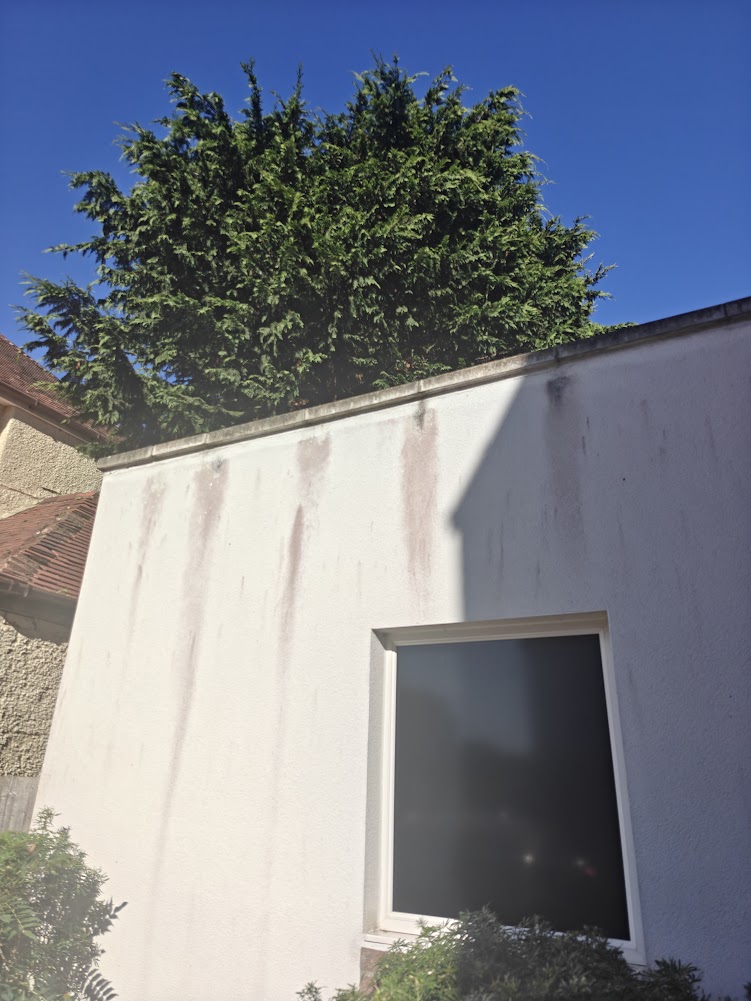
Why do black streaks often appear below edges and sills?
Rainwater follows the same paths every time it runs off a sill or coping. Those lines stay wetter for longer, organic growth establishes there first and dirt collects with it. How exposed the wall is, and the detailing above it, shape the pattern you see.
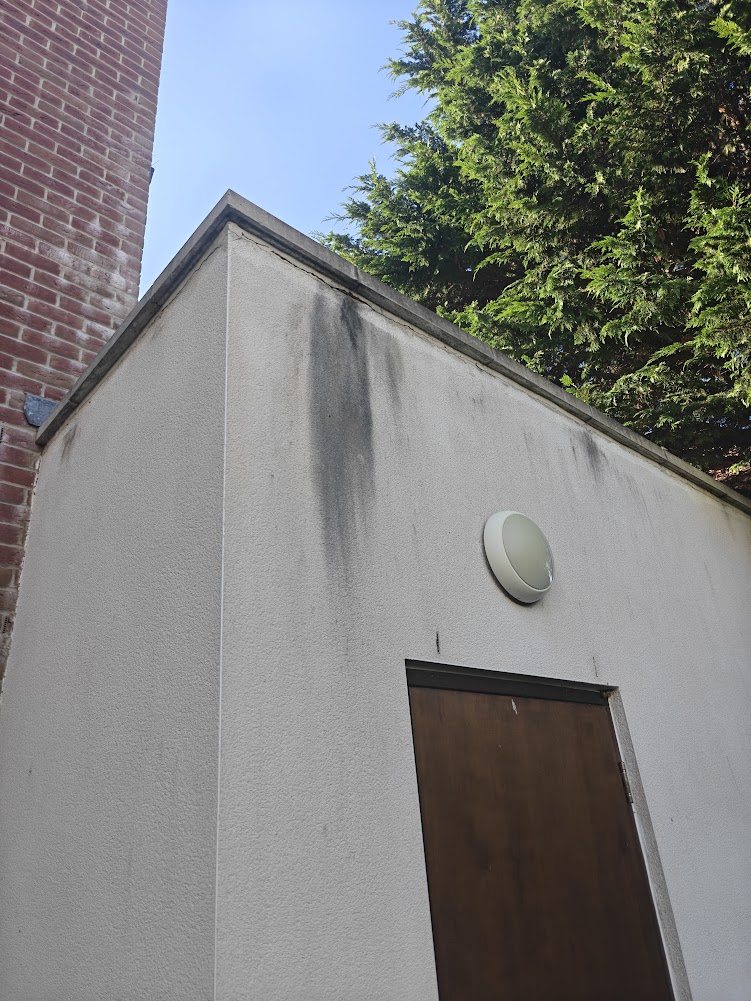
Does black staining mean the render has failed?
Not necessarily. Growth and staining often appear on render that is otherwise perfectly serviceable.
Read moreShow less
Where there are cracks, coating failure, persistent damp or other building defects, cleaning alone may not address the underlying cause, and we will say so if we see signs of it.
Can you pressure wash render?
We generally avoid aggressive pressure on rendered walls. The cleaning method should suit the render system and its condition. Softwashing lets organic contamination be treated without relying on high pressure.
How are black marks professionally removed?
1. Identify the likely cause of the staining. 2. Assess the surface and render type. 3. Protect surrounding areas and planting. 4. Apply an appropriate cleaning treatment. 5. Allow enough dwell time for it to work. 6. Rinse, or allow natural weathering, depending on the system. 7. Assess the result.
K Rend and modern silicone renders
K Rend, monocouche, silicone and painted renders all behave differently. No single process is right for every product, so we confirm the render type and adjust the treatment and rinse accordingly.