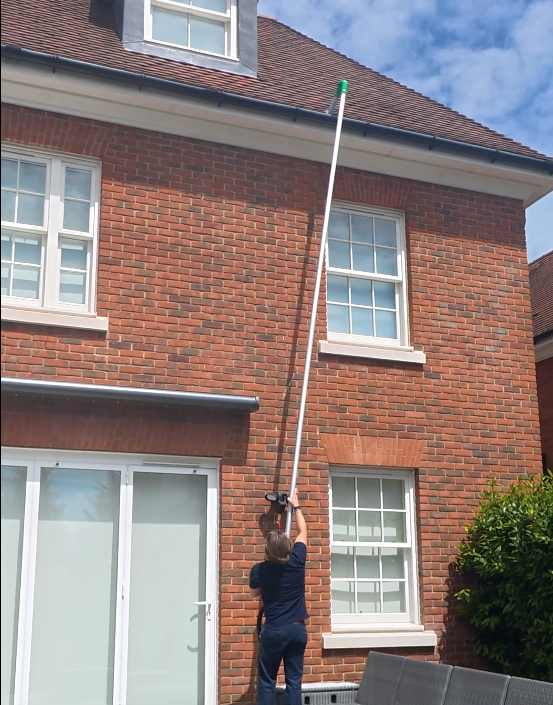
Why Are My Gutters Overflowing?
Most overflowing gutters are simply full. Leaves, moss washed off the roof and years of silt build up until rainwater has nowhere to go. Here are the usual causes and what to do.
Published 24 September 2026
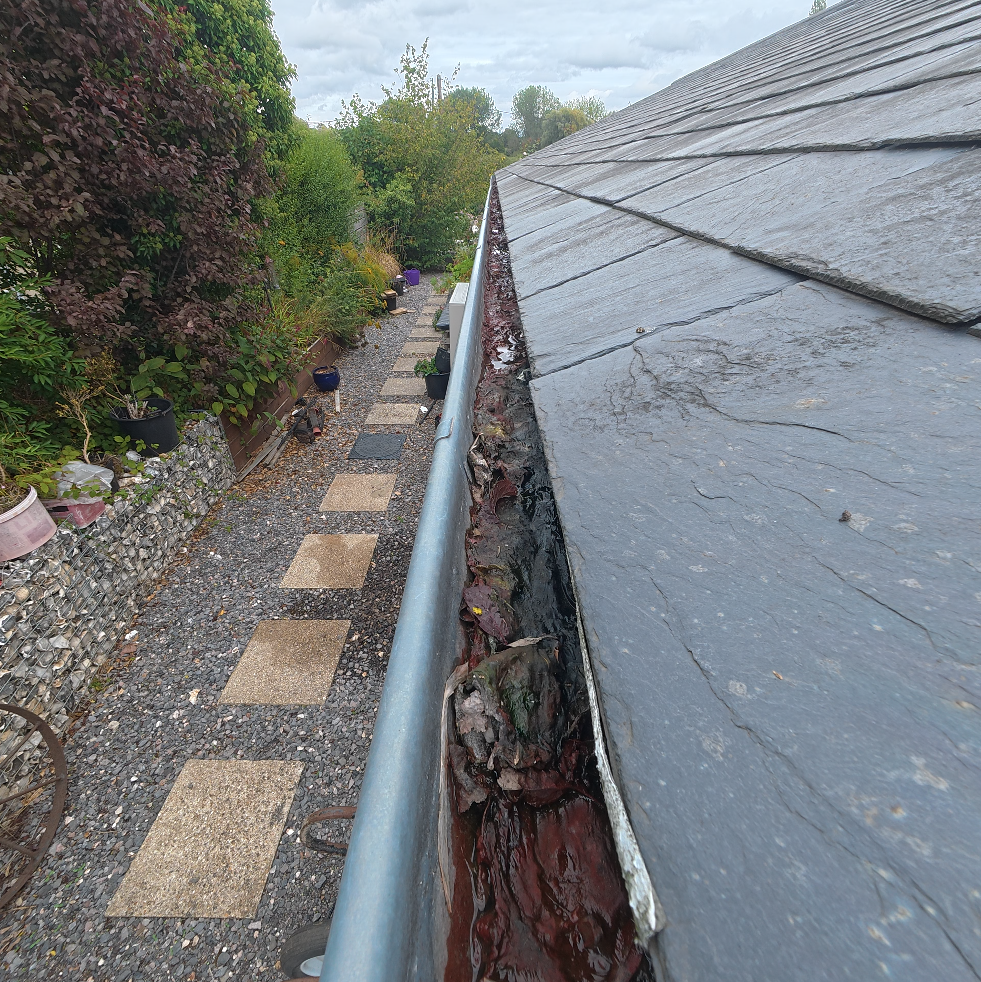
Leaves
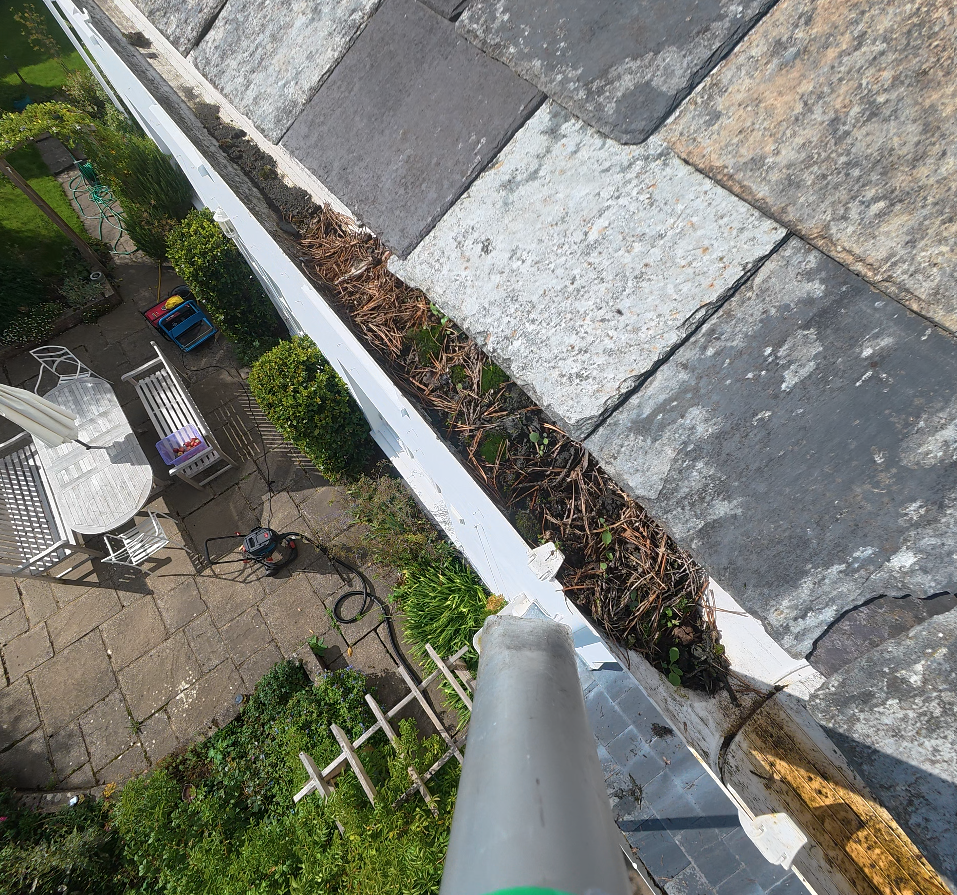
Autumn leaves are the most common cause. They settle along the gutter, gather at the outlet and form a mat that holds water back, especially on homes near mature trees.
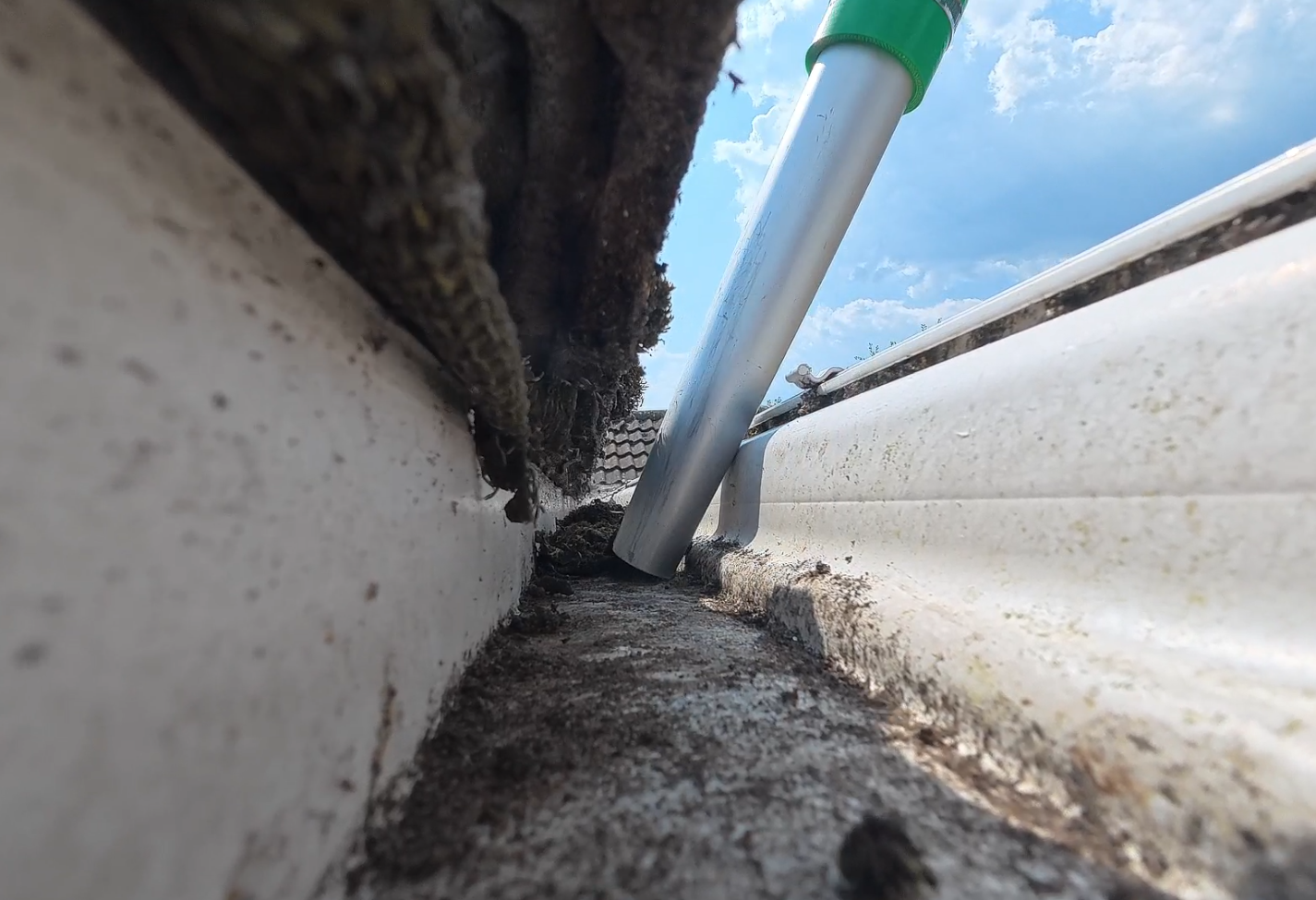
Moss washing from the roof
Moss on roof tiles dries out, breaks up and is washed into the gutter by rain. Over time it packs down into a dense layer, and on some roofs grass and small plants start growing in it.
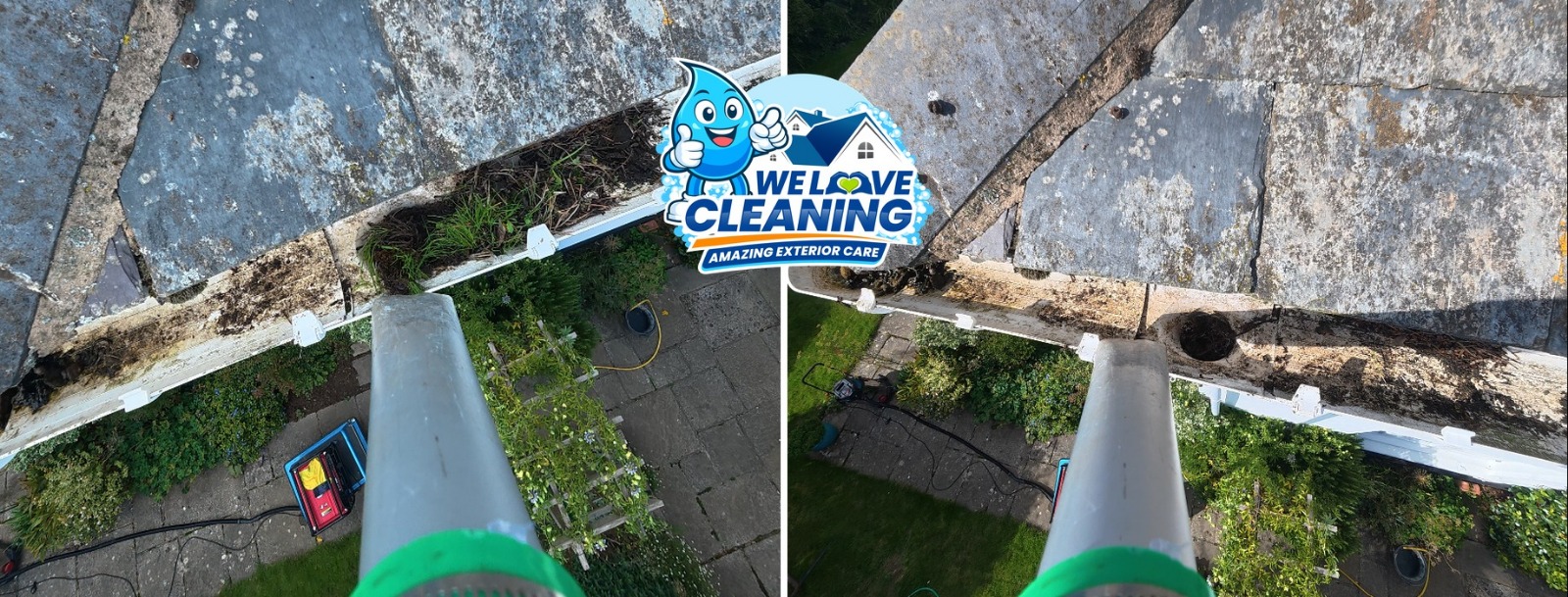
Silt and decomposed material
Leaves and moss left in the gutter break down into a fine, heavy silt. It is less obvious from the ground than leaves, but it steadily reduces how much water the gutter can carry.
Blocked outlets
Debris naturally collects where the gutter meets the outlet into the downpipe. When that point blocks, water backs up along the run and spills over, even if the rest of the gutter looks fairly clear. We clear debris from the gutter and around the outlet as part of a gutter clear.
Excessive build-up
Gutters that have not been cleared for several years can be full along their whole length. The weight can also make the gutter sag, which makes overflowing worse.
Gutter alignment or damage
Sometimes a gutter overflows because it has dropped, lost its fall or has a damaged joint. Our live inspection camera often shows this while we work, and we will let you know what we see. Please note we provide gutter clearing rather than gutter repair, so any repair work would need a roofline or guttering specialist.
What to do about an overflowing gutter
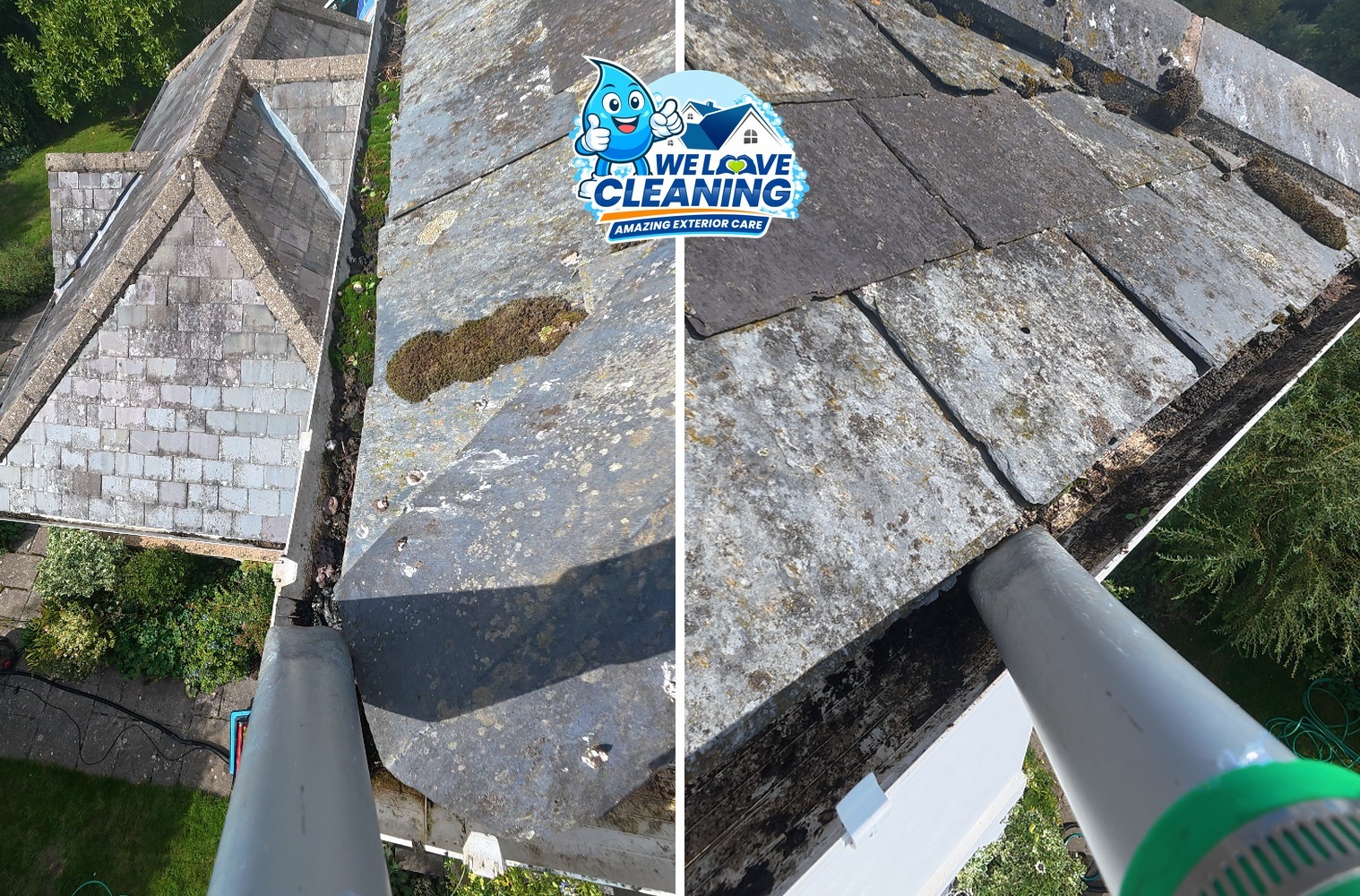
If your gutters are overflowing, don't wait for a particular month. We clear gutters from the ground with a pole-mounted vacuum and a live inspection camera, so no ladders rest against your property. Register your interest and we will give a price over the phone where possible, or use our instant gutter estimate.